Legal Compliance Checklist for Startups in India (2026 Guide)
- MOHIT GARG
- 4 days ago
- 3 min read

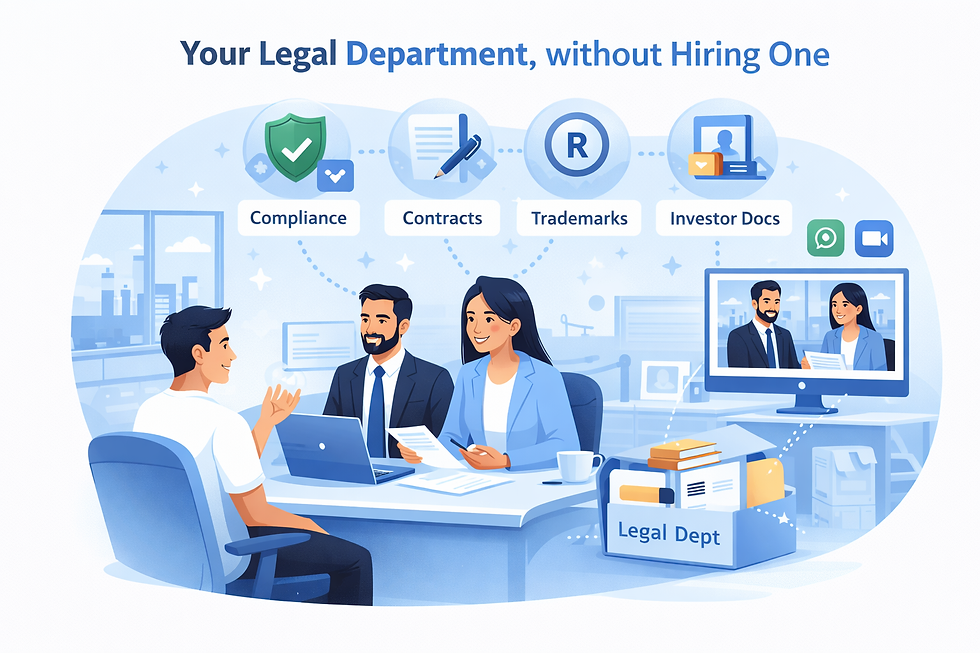
Starting a business in India is easier than ever—but staying legally compliant is where most startups struggle.
From missed filings to weak contracts, legal oversights are one of the top reasons startups face penalties, disputes, and shutdowns. Unfortunately, many founders only think about legal help after a problem arises.
This guide breaks down the most important legal compliances every startup in India must follow, explained in simple terms.
Why Legal Compliance Is Critical for Startups
Non-compliance can lead to:
Heavy government penalties
Director disqualification
Investor rejection during due diligence
Contract disputes and payment losses
Brand and IP theft
The right legal structure and ongoing compliance can save lakhs of rupees and years of litigation.
1. Company Incorporation & Basic Registrations
Every startup must start with proper structuring.
Mandatory steps include:
Choosing the right entity (Private Limited / LLP / OPC)
Company incorporation with MCA
PAN & TAN registration
Bank account opening
MSME (Udyam) registration
GST registration (if applicable)
👉 Wrong structure today = tax and compliance issues tomorrow.
2. Founders’ & Shareholding Agreements
One of the most ignored—but most important—areas.
Key documents:
Founders’ Agreement
Shareholding & equity split
Vesting clauses
Exit & dispute resolution terms
📌 Real-life issue:Many startups collapse due to founder disputes, not market failure.
3. ROC & MCA Compliances
After incorporation, compliance is ongoing.
Includes:
Annual ROC filings
Financial statements
Director disclosures
Board resolutions
Statutory registers
Missing deadlines can result in:
Late fees
Director disqualification
Company strike-off
4. Contracts & Legal Documentation
Startups run on contracts—but often without reviewing them properly.
Essential contracts:
Client & service agreements
Vendor & supplier contracts
NDAs
Partnership agreements
SaaS or licensing agreements
⚠️ Most disputes arise from poorly drafted contracts copied from the internet.
5. Employment & HR Legal Compliance
Hiring without legal documentation is risky.
You need:
Employment agreements
Consultant/freelancer contracts
HR policies
POSH compliance
Termination & exit documentation
Labour law violations can attract penalties even for small teams.
6. Intellectual Property (IP) Protection
Your brand is your asset.
Protect it through:
Trademark registration
Copyright registration
IP ownership clauses
Assignment & licensing agreements
🚨 Without IP protection, anyone can legally use your brand name or logo.
7. Data Protection & Website Compliance
Especially critical for tech, SaaS, and online businesses.
Must-have documents:
Privacy Policy
Terms & Conditions
Data protection compliance
IT Act & DPDP Act alignment
Non-compliance can lead to:
Platform bans
Legal notices
Loss of user trust
8. Funding & Investor Legal Readiness
Before raising funds, startups must be legally clean.
Investors check:
Compliance history
Contracts
IP ownership
Cap table
Pending disputes
Even great startups lose funding due to poor legal hygiene.
The Smarter Way: Ongoing Legal Support
Hiring a full-time legal team is expensive.Ignoring legal needs is risky.
That’s why modern startups prefer a subscription-based legal partner—acting as their in-house legal department without hiring.
How Bharat Legal Counsel Helps Startups
At Bharat Legal Counsel, we help startups:
Stay compliant at every stage
Prevent disputes before they arise
Manage legal work at predictable monthly costs
Scale confidently with legal clarity
From incorporation to compliance, contracts to funding—we handle it all.
Final Thoughts
Legal compliance is not a one-time task—it’s an ongoing process.
Startups that treat law as a growth tool, not a burden, are the ones that survive, scale, and succeed.
If you’re building a business, make sure your legal foundation is as strong as your idea.


Comments